
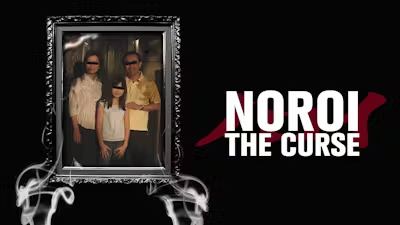
lareddepathways.com – Noroi: The Curse (2005), directed by Kōji Shiraishi, is a groundbreaking Japanese horror film that combines the found footage style with traditional elements of supernatural folklore. This chilling and atmospheric film has gained a cult following for its eerie tone, its disturbing depiction of ancient curses, and its slow-building sense of dread. Noroi is often hailed as one of the best examples of found footage horror, blending a documentary-style narrative with a creeping, existential terror that stays with viewers long after the film ends.
The film’s unique approach to horror—focusing on the gradual uncovering of a terrifying curse—sets it apart from more conventional ghost stories, offering a deeply unsettling experience that feels as much like a real investigation as a work of fiction. The blending of the mundane and the supernatural, along with its intricate narrative structure, makes Noroi a standout entry in the genre of Japanese horror.
Plot Overview: A Paranormal Investigation Into an Ancient Curse
The story of Noroi: The Curse is structured around the investigation of a journalist named Masami, who is trying to unravel the mystery behind a series of increasingly bizarre and unsettling events linked to an ancient curse. The film opens with the sudden and unexplained death of Masami, who is found in her apartment with no clear cause of death. She was investigating a series of disturbing paranormal occurrences involving a curse, and the film follows her journey through various tapes, interviews, and documentation as a way to piece together the events leading up to her tragic end.
The curse itself is tied to a series of interconnected people and events, all centered around an ancient ritual involving a cursed spirit. Masami’s investigation delves deep into the legend of a demonic entity known as the “Kagutaba,” a vengeful spirit that possesses individuals, brings misfortune, and causes death. The curse seems to have originated from a mysterious rural family who were involved in this ancient ritual. Masami uncovers a chilling chain of events linking the cursed family, the mysterious happenings, and her own unfortunate fate.
As the film progresses, Masami’s investigation takes her deeper into the supernatural world, uncovering terrifying secrets. The curse begins to escalate, spreading its influence over everyone involved in the case, ultimately leading to a terrifying and unexpected conclusion. The film’s horror is both psychological and physical, as the curse affects the lives of those who encounter it, spiraling into chaos.
Themes: Curses, Folklore, and the Power of the Unknown
Noroi explores several key themes, primarily centered around curses, ancient rituals, and the terrifying power of the unknown. The film’s foundation is built on the concept of an ancient curse—an invisible, unstoppable force that cannot be avoided or escaped. The curse itself is rooted in Japan’s rich tradition of folklore, where vengeful spirits, or “yūrei,” play a central role in many ghost stories. The film takes inspiration from these tales and amplifies them into something far more disturbing.
The curse in Noroi operates on multiple levels, affecting both the physical world and the spiritual realm. As Masami uncovers more about the ritual and the cursed family, it becomes clear that the entity they are dealing with is far more malevolent and far-reaching than initially expected. The curse seems to transcend time and space, extending its influence to anyone who comes into contact with it, creating a sense of inevitable doom that looms over every character.
At its heart, Noroi is about the unknown. The curse represents an ancient, incomprehensible force that is beyond human understanding or control. As the investigation uncovers more information, the audience realizes that the curse is unstoppable, and the knowledge of it only worsens the situation. This existential horror—the realization that there are forces in the world beyond human comprehension—is a central theme in the film, heightening the sense of terror as the characters get closer to the truth.
Cinematic Style: Found Footage and Documenting Horror
One of the defining aspects of Noroi: The Curse is its use of the found footage format, which gives the film a sense of realism and immediacy that heightens the horror. The film is presented as a documentary, with various videotapes, interviews, and news reports piecing together the investigation into the curse. This format allows the viewer to experience the events from a more personal and intimate perspective, as though they are part of the investigation themselves.
The found footage style helps to blur the line between reality and fiction, creating a sense of unease as viewers are forced to question what is real and what is fabricated. The raw, unpolished footage creates an atmosphere of dread and uncertainty, allowing the supernatural events to feel more plausible and grounded. The film’s slow pacing and meticulous focus on detail allow the horror to build gradually, making the eventual scares all the more effective.
The documentary style also allows the filmmakers to weave together a complex narrative, incorporating multiple perspectives and a variety of sources. By using various materials—such as video recordings, personal testimonies, and even news footage—the film unfolds in a way that feels natural and immersive. The audience is invited to piece together the mystery alongside the characters, leading to a satisfying, though deeply unsettling, climax.
Sound and Atmosphere: A Subtle and Creeping Dread
The atmosphere in Noroi is built through a combination of sound design and visual storytelling. The film’s score is sparse, with much of the tension being created through silence and subtle ambient noises. The lack of overt musical cues makes the supernatural events feel even more unnerving, as there is no comforting soundtrack to guide the audience’s emotions.
The sound design in Noroi is particularly effective in building the sense of unease. The film uses the sounds of nature—wind, creaking doors, and distant voices—interspersed with unsettling moments of supernatural noise, such as whispers and distorted voices. These sounds heighten the horror without relying on jump scares or overtly dramatic effects.
The film’s visuals also contribute to its unsettling tone. The use of handheld cameras and shaky footage gives the sense that the characters are exploring the unknown, amplifying the feeling that the audience is there with them, on the edge of their seats. The environments, whether dark rural villages or eerie suburban homes, are depicted with an air of isolation and menace. These settings serve as perfect backdrops for the unfolding terror, adding to the sense of foreboding that permeates the film.
Legacy and Influence: A Modern Classic of Japanese Horror
Since its release, Noroi: The Curse has become a significant entry in the canon of Japanese horror films, particularly in the found footage subgenre. It is often regarded as a more sophisticated and cerebral example of the genre, one that relies more on atmosphere, tension, and the slow reveal of supernatural elements than on graphic violence or jump scares. This nuanced approach to horror sets Noroi apart from other films in the found footage genre, which can sometimes lean too heavily on gimmicks.
The film has garnered a cult following, particularly among fans of slow-burn horror. Its influence can be seen in later horror films, both within Japan and internationally, that use found footage to explore supernatural themes. The film’s subtle, methodical pacing and its ability to build tension over time have inspired many filmmakers looking to capture the same sense of creeping dread.
In addition to its influence on the horror genre, Noroi has been praised for its intellectual approach to horror. The film presents the supernatural not as something easily understood or conquered, but as an unfathomable force that must be respected. It is this thematic depth, combined with its terrifying moments, that cements Noroi: The Curse as one of the most significant horror films of the 21st century.
Conclusion: A Haunting Exploration of the Unseen
Noroi: The Curse (2005) is a masterful blend of supernatural horror, folklore, and the found footage genre, offering a chilling and unsettling experience that is both deeply atmospheric and intellectually engaging. The film’s slow-building tension, its exploration of an ancient and malevolent curse, and its documentary-style presentation all contribute to making it one of the most memorable and haunting films in Japanese horror.
By focusing on the dread of the unknown and the inevitability of supernatural forces, Noroi crafts a narrative that is as thought-provoking as it is terrifying. Its use of the found footage format creates an immersive experience, while its psychological horror lingers long after the film has ended. For fans of atmospheric horror, Noroi remains an essential and unforgettable film.
