
Gdańsk Days: A Celebration of History and Culture

lareddepathways.com – Gdańsk Days is a vibrant city-wide festival that celebrates the rich history and culture of Gdańsk, one of Poland’s most historic and picturesque cities. Held annually, this festival attracts both locals and tourists, offering a unique opportunity to immerse oneself in the city’s maritime heritage, artistic traditions, and lively atmosphere.

A Tapestry of History and Culture

Gdańsk Days offers a diverse program of events and activities, showcasing the city’s multifaceted identity. Some of the highlights of the festival include:

  • Historical Reenactments: Visitors can witness captivating historical reenactments that bring the city’s past to life. From medieval knights to 17th-century merchants, these performances offer a glimpse into Gdańsk’s rich history.
  • Maritime Traditions: Gdańsk’s maritime heritage is celebrated through boat parades, sailing competitions, and exhibitions of traditional shipbuilding techniques. Visitors can also explore the city’s historic shipyard, a symbol of Polish solidarity and resistance.
  • Cultural Performances: The festival features a variety of cultural performances, including music, dance, and theater. From classical concerts to folk music performances, there’s something for everyone.
  • Art Exhibitions: Gdańsk Days showcases the work of local and international artists, with exhibitions held in galleries, museums, and public spaces.
  • Food and Drink: The festival offers a culinary journey through Gdańsk’s diverse culinary scene. Visitors can sample traditional Polish dishes, seafood specialties, and local beers.
  • Family-Friendly Activities: Gdańsk Days caters to families with children, offering a range of activities such as face painting, puppet shows, and children’s workshops.

A City Transformed

During Gdańsk Days, the city is transformed into a vibrant and festive space. Streets are adorned with colorful decorations, and the historic center is filled with the sounds of music and laughter. The festival creates a sense of community and pride among Gdańsk’s residents, as they come together to celebrate their city’s unique identity.

The Impact of Gdańsk Days

Gdańsk Days plays a significant role in promoting Gdańsk as a cultural and tourist destination. The festival attracts visitors from around the world, boosting the local economy and raising awareness of the city’s rich history and cultural heritage.
New Year’s Day in the Philippines: Traditions and Festivities

lareddepathways.com – New Year’s Day, known locally as “Araw ng Bagong Taon,” is a significant holiday in the Philippines, marking the beginning of the Gregorian calendar’s new year. It is a time for reflection, hope, and celebration, with Filipinos embracing a mix of Western and indigenous traditions to welcome the coming year.

The Significance of New Year’s Day

In the Philippines, New Year’s Day is more than just a festive occasion; it is a time for families to come together and reflect on the past year’s achievements and challenges. It is also a moment to set new goals and make resolutions for the coming year, with the hope of bringing good luck and prosperity.

Traditional Celebrations and Customs

Fireworks and Firecrackers

Like many countries around the world, Filipinos celebrate New Year’s Eve with fireworks and firecrackers, which are believed to drive away evil spirits and bring good fortune. However, due to safety concerns, there has been a push towards firework displays organized by local governments rather than individual use of firecrackers.

Media Noche

A highlight of New Year’s Eve in the Philippines is the “Media Noche” or midnight supper, where families gather to enjoy a feast of traditional Filipino dishes. It is believed that the food one eats at midnight will set the tone for the coming year, so many opt for round fruits and foods, which symbolize completeness and prosperity.

New Year’s Eve Countdown

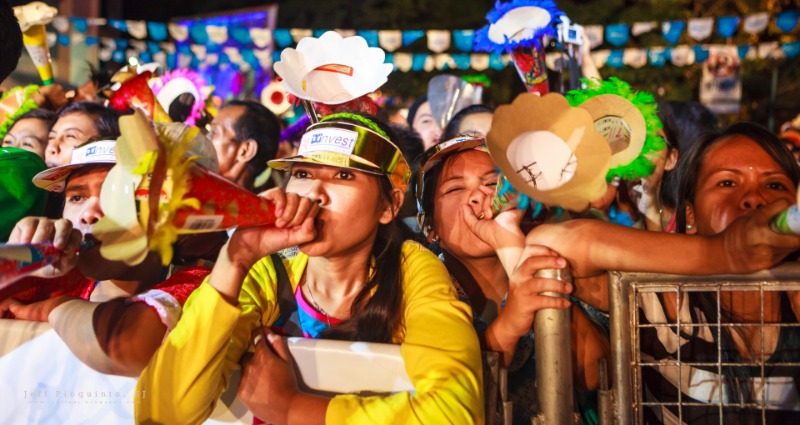
As the clock strikes midnight, Filipinos join in the countdown to the New Year. Church bells ring, and people cheer, making noise with various instruments or kitchenware to scare away bad spirits. Some also light candles to symbolize the coming of light and hope.

Cultural Practices and Superstitions

Wearing Polka Dots

It is common for Filipinos to wear polka-dotted clothing on New Year’s Eve, as the pattern is believed to attract money and good fortune.

Round Fruits and Coins

Displaying round fruits and coins around the house is a popular tradition, as they are thought to bring prosperity and abundance.

Jumping at Midnight

Some Filipinos believe that jumping at the stroke of midnight can help them grow taller or achieve greater heights in the coming year.

Community Celebrations

New Year’s Day in the Philippines is a public holiday, and many communities organize events such as parades, concerts, and religious services to celebrate. People visit churches to attend mass and pray for blessings for the new year.

A Time for Family and Reflection

Despite the festivities, New Year’s Day in the Philippines is fundamentally a time for families to bond and reflect on the past year’s journey. It is a moment to give thanks for the blessings received and to look forward to the opportunities that the new year may bring.

As the Philippines continues to blend its rich cultural heritage with modern celebrations, New Year’s Day remains a cherished occasion that encapsulates the Filipino spirit of resilience, hope, and togetherness.