
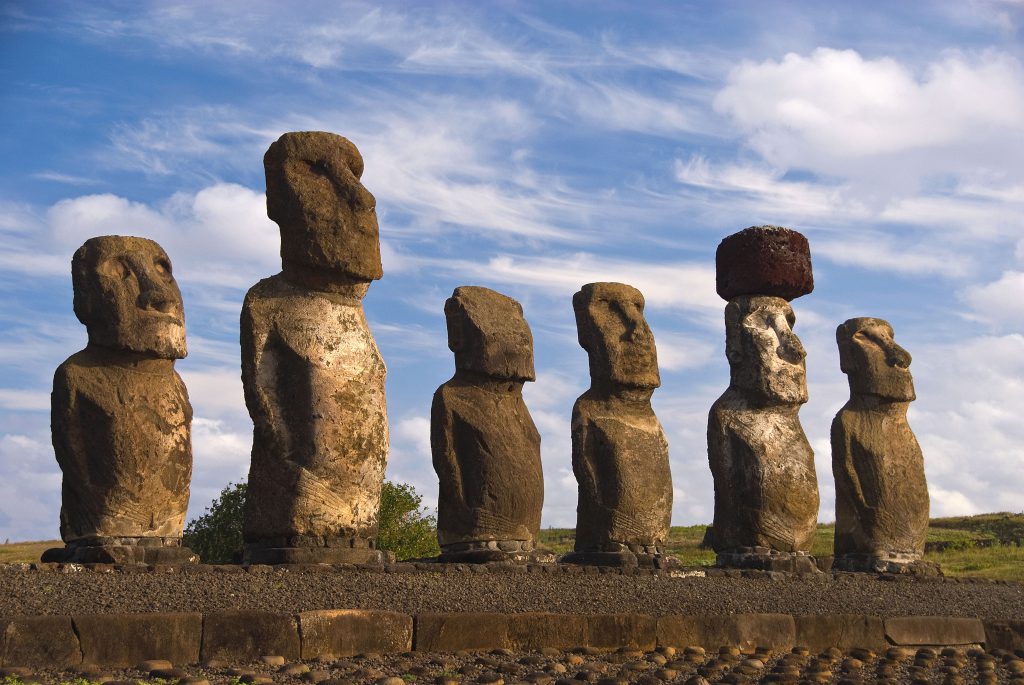
The Social and Political Structure of Ancient Rapa Nui

lareddepathways.com – Rapa Nui, also known as Easter Island, is a remote Polynesian island located in the southeastern Pacific Ocean. The island is renowned for its monumental stone statues, known as moai, which have captivated the world’s imagination. However, the social and political structure of the ancient Rapa Nui people is equally fascinating and complex. This article delves into the tribal organization, confederations, and the role of social structures in the ancient Rapa Nui society.

Tribal Organization

The social structure of the Rapa Nui people was fundamentally tribal. The island was divided into independent tribal bodies called mata, which were grouped into two main confederations. This tribal organization was central to the social and political life of the Rapa Nui, providing a framework for governance, resource management, and cultural practices.

Confederations

The two main confederations on Rapa Nui were the Hanau epe and the Hanau momoko. These confederations were not just political entities but also had significant cultural and ceremonial roles. The confederations were responsible for organizing and overseeing the construction of the moai and the ahu (platforms) on which they stood. These monumental structures served as spatial centers for social, political, economic, and ceremonial activities.

Social and Political Roles

The social structure of Rapa Nui was intricately linked with its political economy. The construction and maintenance of the moai and ahu required a high degree of social organization and labor coordination. The chiefs, or ariki, played a crucial role in this process, acting as both political leaders and religious figures. They were responsible for organizing the workforce, managing resources, and conducting ceremonies that reinforced the social hierarchy and the legitimacy of their rule.

Settlement Structure

The settlement structure of Rapa Nui was also a reflection of its social and political organization. The thesis on the social structure of the settlement of Hanga o’Honu provides insights into the spatial organization of the island before European contact. The settlements were designed to support the social and political functions of the confederations, with specific areas designated for different activities such as farming, fishing, and ceremonial gatherings.

Conclusion

The social and political structure of ancient Rapa Nui was a sophisticated system that integrated tribal organization, confederations, and monumental architecture. This structure not only facilitated the construction of the iconic moai but also supported the social, political, and economic life of the Rapa Nui people. Understanding this structure provides valuable insights into the resilience and ingenuity of the ancient Rapa Nui society.

The Hidden Messages: Deciphering Ancient Knowledge

lareddepathways.com – The Mayan civilization, known for its advanced mathematical and astronomical knowledge, left behind a rich legacy of written records known as the Mayan Codices. These documents, written on bark paper or deer hide, are a treasure trove of information about the Mayan culture, religion, and science. Despite the destruction of many of these texts by Spanish conquistadors and priests in the 16th century, a few survived, offering modern scholars a glimpse into the complex world of the ancient Maya.

The Surviving Codices

There are four surviving Mayan codices: the Dresden Codex, the Madrid Codex, the Paris Codex, and the Grolier Codex. Each of these documents contains a variety of information, including astronomical tables, calendrical data, and rituals. The Dresden Codex, for example, is famous for its Venus Table, which predicts the movements of the planet Venus over time. The Madrid Codex focuses on rituals and the Paris Codex on deities and mythological narratives. The Grolier Codex, the most recently discovered, contains astronomical and calendrical information.

Deciphering the Ancient Knowledge

The decipherment of the Mayan codices has been a long and complex process. The Maya used a combination of logograms (symbols representing words or phrases) and syllabic signs to write their language. The breakthrough in decipherment came in the 20th century, with the work of scholars like Yuri Knorozov, who applied linguistic principles to the Mayan script, revealing its phonetic elements.

Astronomical Insights

One of the most significant revelations from the codices is the Mayan understanding of astronomy. The Maya were meticulous observers of the sky, and their codices contain detailed records of celestial events. The Venus Table in the Dresden Codex, for instance, shows an advanced understanding of the synodic cycle of Venus, which is the period of time between two successive conjunctions of a planet with the Sun.

Calendrical Precision

The Mayan calendar is another area where the codices provide profound insights. The Maya used several calendars, including the Tzolk’in (a 260-day ritual calendar), the Haab’ (a 365-day solar calendar), and the Long Count (a linear count of days used to date events). The codices contain detailed calendrical tables that show the Maya’s ability to predict eclipses and other astronomical events with remarkable accuracy.

Mythology and Rituals

The codices also reveal the rich mythology and ritual practices of the Maya. The Paris Codex, in particular, contains illustrations of deities and narratives that provide context to the rituals and beliefs of the Mayan people. These texts show a complex pantheon of gods and goddesses, each with specific attributes and domains.

The Importance of the Mayan Codices

The Mayan codices are not just historical artifacts; they are living documents that continue to teach us about the ancient Maya. They provide a window into the thoughts, beliefs, and knowledge of a civilization that thrived in the Americas long before European contact. By studying these codices, we can gain a deeper understanding of the Mayan worldview and their sophisticated knowledge of astronomy, mathematics, and agriculture.

Conclusion

The hidden messages of the Mayan codices are a testament to the ingenuity and intelligence of the ancient Maya. As we continue to decipher these ancient texts, we uncover more of the knowledge that was thought to be lost. The Mayan codices remind us of the importance of preserving our cultural heritage and the lessons that can be learned from civilizations of the past. Through these documents, the Maya continue to speak to us across the centuries, offering insights into their world and challenging us to appreciate the depth of their knowledge and the richness of their culture.