
Fumio Kishida: Japan’s Prime Minister (2021–Present)

lareddepathways.com – Fumio Kishida, born on July 29, 1957, is a Japanese politician who has served as the Prime Minister of Japan since October 2021. As the leader of the Liberal Democratic Party (LDP), Kishida assumed office during a time of significant challenges both domestically and internationally, including Japan’s response to the COVID-19 pandemic, economic recovery, and rising geopolitical tensions, especially with neighboring China and North Korea.

Early Life and Education

Fumio Kishida was born in the city of Hiroshima, Japan, into a family with a long history of political involvement. His grandfather, Kishida Ryozo, was a prominent figure in the House of Representatives, and his father, Kishida Fumitake, served as a member of the House of Councillors. Growing up in a political family, Kishida was exposed to politics from an early age, which influenced his decision to pursue a career in public service.

Kishida attended Waseda University in Tokyo, where he earned a degree in law. His education provided a strong foundation for his later political career, equipping him with the knowledge of Japanese law and governance, which he would later apply in his roles in government.

Political Career and Early Roles

Kishida’s political career began in earnest in 1993, when he was elected to the House of Representatives as a member of the LDP, representing Hiroshima’s first district. His rise within the party was steady, and he soon gained recognition for his diplomatic skills and deep understanding of international relations.

Over the years, Kishida held a series of important roles in the Japanese government, most notably serving as the Minister of Foreign Affairs from 2012 to 2017 under Prime Minister Shinzo Abe. During his tenure as foreign minister, Kishida played a key role in shaping Japan’s foreign policy, including efforts to improve relations with neighboring countries, promote Japan’s interests on the global stage, and navigate the complexities of the Asia-Pacific region. He was known for his calm, methodical approach to diplomacy and his ability to manage delicate international situations.

In addition to his foreign policy experience, Kishida also served in other significant positions, including as the Chairman of the LDP’s Policy Research Council. His political experience and expertise in both domestic and foreign policy helped him gain the support necessary to lead the party and, eventually, the country.

Becoming Prime Minister

In September 2021, Kishida won the leadership of the Liberal Democratic Party after a contentious leadership contest, defeating Taro Kono, the then-vaccine minister. His victory marked the beginning of his tenure as Prime Minister, succeeding Yoshihide Suga, who stepped down due to declining approval ratings and challenges in managing the pandemic.

Kishida’s selection as leader of the LDP and subsequent appointment as Prime Minister came during a period of political instability in Japan, exacerbated by the ongoing COVID-19 pandemic and its associated economic challenges. Despite being less well-known than some of his predecessors, Kishida quickly established himself as a pragmatic and steady leader, promising to address Japan’s pressing issues, particularly in the areas of public health, economic recovery, and national security.

Key Policies and Challenges

As Prime Minister, Kishida’s leadership has been shaped by a combination of ongoing challenges and ambitious policy goals. His administration has faced numerous hurdles, including the aftermath of the pandemic, a sluggish economy, and mounting security concerns in the region.

COVID-19 Response and Economic Recovery

One of Kishida’s first major tasks as Prime Minister was managing Japan’s ongoing response to the COVID-19 pandemic. Japan, like many countries, faced significant public health challenges, including rolling lockdowns, social distancing measures, and an economic slowdown. Kishida’s government worked to accelerate vaccination efforts, and he introduced economic stimulus measures aimed at supporting businesses and citizens affected by the pandemic.

Kishida also introduced a series of economic reforms, promising to implement a “new capitalism” that would focus on reducing inequality, revitalizing the economy, and boosting wage growth. His government pledged to increase support for small and medium-sized businesses and address the widening wealth gap, which became more pronounced during the pandemic.

National Security and Foreign Policy

On the foreign policy front, Kishida’s government has sought to strengthen Japan’s role on the global stage. He has emphasized the importance of a free and open Indo-Pacific region and has worked to bolster Japan’s alliances, particularly with the United States, in the face of rising tensions with China and North Korea.

Under Kishida, Japan has also made efforts to modernize its defense capabilities and increase military spending, responding to growing concerns about China’s military expansion and North Korea’s missile tests. Kishida has been a staunch advocate of Japan’s self-defense forces, while also prioritizing diplomatic measures to prevent conflict in the region.

In addition, Kishida has continued to push for stronger relations with countries like the United States and South Korea, as well as efforts to improve Japan’s global standing through multilateral organizations like the United Nations.

Domestic Challenges and Political Reform

Domestically, Kishida has faced several challenges, including Japan’s aging population, which has placed significant pressure on the country’s social welfare system, as well as the need for economic revitalization. He has proposed reforms aimed at addressing these challenges, including efforts to boost Japan’s workforce through automation and improving labor market policies.

Kishida’s leadership has also been tested by domestic political scandals and public dissatisfaction with his handling of certain issues, such as the government’s response to the pandemic and economic inequality. His approval ratings have fluctuated, but he has maintained political stability by focusing on pragmatic solutions to Japan’s most pressing issues.

Personal Life and Leadership Style

Fumio Kishida is known for his calm, measured demeanor and his strong communication skills. His style is often described as diplomatic and consensus-driven, traits that have served him well in his lengthy political career. Unlike some of his more aggressive predecessors, Kishida is seen as a steady hand capable of guiding Japan through difficult times, though his leadership is also characterized by a cautious approach to major reforms.

Kishida is married to Yuko Kishida, and the couple has three children. He is known to maintain a relatively low-key personal life, preferring to focus on his work rather than public appearances. He is also a known advocate for traditional Japanese values and culture, having emphasized the importance of preserving Japan’s heritage while balancing it with the challenges of modern governance.

Conclusion

As Prime Minister of Japan, Fumio Kishida has faced a unique set of challenges, both domestically and internationally. From managing Japan’s response to the COVID-19 pandemic to addressing economic and national security concerns, Kishida has navigated a complex political landscape with a focus on stability and pragmatic leadership. While his tenure has been marked by both challenges and successes, his ability to adapt to shifting political dynamics and to work with key allies on the global stage will shape Japan’s future in the years to come.

Fumio Kishida’s leadership reflects the balancing act that Japan faces: maintaining its traditional values while also adapting to a rapidly changing world. As Japan continues to confront both internal and external challenges, Kishida’s role as Prime Minister will remain crucial in steering the country towards a prosperous and secure future.
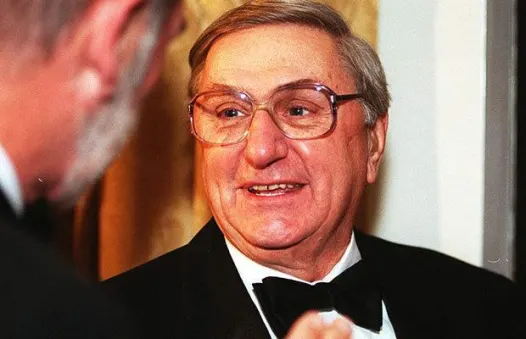
Roméo LeBlanc: A Leader & Governor General of Canada

lareddepathways.com – Roméo LeBlanc served as the 25th Governor General of Canada from 1995 to 1999, leaving a notable mark on the country’s political and social landscape. His tenure as the Queen’s representative in Canada was marked by his commitment to public service, dedication to national unity, and a focus on creating connections with Canadians across all provinces and territories. LeBlanc’s background as a former journalist, cabinet minister, and Senator equipped him with a unique perspective on Canadian society, which he used to strengthen the position of the Governor General and bring a fresh approach to the role.

Throughout his tenure, LeBlanc focused on representing the diverse people of Canada, strengthening the role of the Crown in Canadian life, and ensuring the country’s growth and unity during a time of political and economic transition. This article explores his career before and during his time as Governor General, his contributions to Canadian society, and the lasting legacy he left in Canadian politics.

Early Life and Career

Roméo LeBlanc was born on December 18, 1939, in Memramcook, New Brunswick, into a French-speaking Acadian family. Growing up in the heart of Acadia, LeBlanc was deeply connected to his cultural roots, and this would later inform much of his political career. He attended the Université de Moncton and studied in French literature, a path that reflected his commitment to preserving and promoting the Acadian culture and language.

LeBlanc’s professional career began in journalism, where he worked for the Radio-Canada network. His time as a journalist gave him a unique understanding of the media and public communication, skills that would later prove valuable in his political life. LeBlanc’s journalistic background allowed him to build connections across the country and understand the dynamics of Canadian society, which he used effectively in his public service.

Political Career: From Minister to Senator

LeBlanc entered the world of politics in the 1970s, first serving as a Member of Parliament (MP) for the Liberal Party of Canada. He was elected in the 1972 federal election and quickly rose through the ranks due to his skillful handling of various issues, including language rights and minority representation. LeBlanc’s advocacy for the French-speaking population, particularly in New Brunswick, became one of the defining aspects of his political persona.

In 1979, LeBlanc was appointed to the Cabinet of Prime Minister Pierre Trudeau, holding several important portfolios, including Minister of Fisheries and Oceans. He focused on a wide range of issues, such as regional development and environmental protection, and was particularly known for his work on behalf of Canada’s coastal communities and the fishing industry.

LeBlanc’s political journey continued when he was appointed to the Senate of Canada in 1983. As a senator, he continued his advocacy for the Acadian community and French speakers across Canada, strengthening his role as a representative of minority interests. His experience as a senator allowed him to build a deep understanding of the functioning of Canada’s political institutions, preparing him for his eventual appointment as Governor General.

Appointment as Governor General of Canada

In 1995, Roméo LeBlanc was appointed Governor General of Canada by Queen Elizabeth II, following the resignation of the previous Governor General, Ray Hnatyshyn. LeBlanc’s appointment was historic, as he became the first Acadian to hold the office of Governor General, representing the significant contribution of the Acadian community to Canadian history and culture. His appointment was also seen as a recognition of his long-standing public service and dedication to the country.

LeBlanc’s tenure as Governor General began during a period of significant political and economic change in Canada. The country was recovering from the economic challenges of the early 1990s and was dealing with the aftermath of the 1995 Quebec referendum, in which Quebec narrowly voted to remain a part of Canada. LeBlanc’s appointment came at a time when national unity was of paramount importance, and his role was to represent all Canadians and foster a sense of unity across the country.

Key Contributions and Initiatives

During his tenure, LeBlanc worked to revitalize the position of Governor General, emphasizing the importance of connecting with ordinary Canadians and encouraging public engagement with the role of the Crown. He was known for his approachable, down-to-earth style and for traveling extensively across the country to meet with citizens, particularly those in more remote or underserved communities.

Fostering National Unity

One of the major challenges during LeBlanc’s term was strengthening national unity, particularly after the 1995 Quebec referendum. The issue of Quebec’s separation from the rest of Canada was a deeply divisive topic, and LeBlanc’s role was seen as key in maintaining a sense of cohesion among Canadians. He worked tirelessly to foster dialogue and understanding between different regions and cultures, representing the interests of all citizens, whether English-speaking or French-speaking, in urban centers or rural areas.

LeBlanc’s Acadian heritage gave him a unique ability to connect with French-speaking communities across Canada, especially in Quebec and the Maritimes. His presence as Governor General helped reassure those who feared the marginalization of French Canadians and their language. He became an advocate for linguistic duality and the preservation of the French language in Canada.

Promoting Canadian Arts and Culture

LeBlanc was a strong proponent of Canadian arts and culture. During his time as Governor General, he encouraged cultural exchanges and supported initiatives that highlighted the diversity of Canadian culture. LeBlanc was involved in various projects that promoted Canadian talent in the fields of music, literature, and visual arts, both domestically and internationally.

As Governor General, LeBlanc presented the prestigious Governor General’s Awards in the Arts, which recognized exceptional achievements in Canadian arts. These awards were an important part of his legacy, as they helped bring attention to the growing artistic talent across the country and fostered a greater appreciation for the arts within Canadian society.

Promoting Volunteerism and Community Engagement

LeBlanc was also an advocate for volunteerism and community involvement. He established the Governor General’s Caring Canadian Award to honor individuals who made significant contributions to their communities through volunteer work. This initiative helped inspire a culture of giving back to society and encouraged Canadians to actively engage in their communities.

LeBlanc believed that volunteerism was an essential part of what made Canada unique and strong. By recognizing those who contributed to the welfare of others, he highlighted the importance of community-building and the role of citizens in shaping the country’s future.

Legacy and Impact

Roméo LeBlanc’s tenure as Governor General is remembered for his dedication to national unity, his advocacy for the Acadian community, and his efforts to strengthen Canadian arts and culture. LeBlanc’s approachable and empathetic leadership style made him a beloved figure in Canadian public life, and his work as Governor General helped reinforce the role of the Crown as a unifying symbol of Canada’s diverse society.

His focus on engaging with Canadians from all walks of life, as well as his commitment to recognizing and celebrating Canada’s multicultural identity, ensured that LeBlanc’s legacy would have a lasting impact on the country. Although his term was relatively short, ending in 1999, his contributions to Canadian society continue to be appreciated by many, especially in the realms of public service, national unity, and cultural promotion.

Roméo LeBlanc’s time as Governor General remains a significant chapter in Canada’s political history, and his leadership is remembered for embodying the values of service, unity, and commitment to Canadian diversity.

The Earl of Athlone: The Governor General of Canada (1940–1946)

lareddepathways.com – The Earl of Athlone, born Prince Alexander of Teck in 1874, served as the Governor General of Canada from 1940 to 1946, during one of the most pivotal periods in Canadian and global history. His tenure as Governor General coincided with the challenges of World War II, and his leadership played a crucial role in fostering national unity and supporting Canada’s involvement in the war effort. As a member of the British royal family and the brother-in-law of King George V, the Earl of Athlone brought a unique perspective to his role in Canada, balancing his aristocratic background with a genuine commitment to the Canadian people.

Early Life and Background

Prince Alexander of Teck was born on April 14, 1874, in London, England, as the son of Prince Francis, Duke of Teck, and Princess Mary Adelaide of Cambridge. His maternal family connections to the British royal family helped him establish strong ties to the British court. His early life was marked by royal expectations and a close relationship with his cousin, King George V.

Alexander of Teck was educated at Eton and later at the Royal Military College of Sandhurst, where he was trained for a career in the British Army. His military career saw service in various postings, including with the British Army in India and Europe. In 1904, he married Princess Alice of Albany, and their union produced two children. Alexander’s military and royal background prepared him for a variety of official duties, including diplomatic posts and ceremonial roles.

In 1905, Alexander was granted the title Earl of Athlone by his brother-in-law, King George V, who had ascended to the throne in 1910. His aristocratic standing and royal connections positioned him well for future responsibilities within the British Empire.

Appointment as Governor General of Canada

In 1940, the Earl of Athlone was appointed Governor General of Canada by King George VI, succeeding Lord Tweedsmuir, who had passed away. His appointment came during a turbulent time for Canada, as the world was in the throes of World War II. The appointment of a member of the royal family to the position of Governor General was a significant gesture of solidarity, particularly as Canada’s role in the war was becoming increasingly important.

The Earl of Athlone’s background, military experience, and royal connections made him a natural fit for the role at this critical juncture in Canada’s history. His close relationship with King George VI and Queen Elizabeth helped maintain strong ties between Canada and the British monarchy.

Leadership During World War II

The most defining feature of Lord Athlone’s tenure as Governor General was his leadership during World War II. When he assumed office, Canada had already entered the war in 1939, following Britain’s declaration of war against Germany. As the country mobilized for war, Lord Athlone worked closely with Prime Minister William Lyon Mackenzie King and the Canadian government to ensure that Canada’s contributions to the war effort were well-coordinated.

Throughout the war, Lord Athlone was a steadfast supporter of the troops, making frequent visits to military bases and war-related facilities across Canada. His efforts to boost morale and his symbolic role as the representative of the Crown were essential in maintaining national unity during the war. He was deeply involved in supporting Canadian forces overseas, particularly in Europe, where Canada played a vital role in the Allied military campaigns.

Lord Athlone’s visits to military personnel were not only ceremonial but also a source of encouragement. His personal military experience allowed him to connect with the soldiers, and his status as a member of the royal family gave him added prestige in the eyes of Canadians. He also worked to ensure that Canada’s contributions to the war effort were recognized and celebrated, both domestically and internationally.

Supporting National Unity

In addition to his role in supporting Canada’s wartime efforts, Lord Athlone worked to foster national unity. During his time in office, Canada was a country still divided by linguistic and cultural differences, with tensions often present between English and French-speaking Canadians. The outbreak of World War II, however, provided a unifying force as Canadians from all regions and backgrounds came together to fight for a common cause.

Lord Athlone’s leadership emphasized the importance of national unity, and he worked to bridge divides within Canadian society. His diplomatic skills and understanding of Canada’s diverse population helped ease tensions, particularly in Quebec, where opposition to conscription was strong. His role in maintaining peace between the two linguistic groups was critical, as conscription debates became one of the most contentious issues during the war years.

While Canada was moving toward greater independence from Britain during this period, Lord Athlone’s position was one of continuity. He represented the Crown, but his actions reinforced the notion that Canada was maturing as a nation and asserting its identity, particularly through its military contributions and wartime leadership.

Post-War Contributions and Legacy

The end of World War II in 1945 marked a turning point for both Canada and the Earl of Athlone. As the war drew to a close, Lord Athlone continued to support the Canadian people, but the post-war period also brought new challenges. Canada was beginning to adjust to the geopolitical realities of the post-war world, including the early stages of the Cold War and the role Canada would play in global diplomacy and peacekeeping.

Lord Athlone’s contributions during the post-war years included supporting veterans and helping Canada transition back to peacetime. He played an important role in recognizing the sacrifices of Canadian soldiers and ensuring that they were honored for their contributions to the war effort. His leadership during this transition period helped guide the country as it navigated the complexities of a post-war world.

Lord Athlone’s tenure as Governor General ended in 1946 when he retired from the post and was succeeded by the Viscount Alexander of Tunis. His departure from office marked the end of a chapter in Canadian history, but his legacy endured. The Earl of Athlone was widely respected for his dignified leadership and his dedication to Canada, particularly during a time of great adversity.

Conclusion

The Earl of Athlone’s time as Governor General of Canada (1940–1946) was defined by his leadership during the global conflict of World War II. His commitment to national unity, his support for Canada’s military efforts, and his diplomatic skills made him a revered figure in Canada’s history. As a member of the royal family, Lord Athlone represented continuity and tradition, while his deep understanding of Canadian society helped him foster a sense of national cohesion.

In the years after his tenure, the Earl of Athlone’s impact remained evident in the country’s development and the role of the Governor General. His leadership during the war helped guide Canada through one of its most challenging periods and ensured that the country emerged from the conflict as a more unified and self-assured nation. Lord Athlone’s legacy as a wartime Governor General, deeply involved in the lives of Canadians, continues to be remembered as an essential chapter in the nation’s history.