
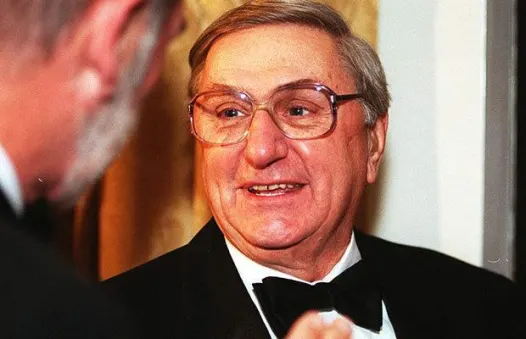
lareddepathways.com – Roméo LeBlanc served as the 25th Governor General of Canada from 1995 to 1999, leaving a notable mark on the country’s political and social landscape. His tenure as the Queen’s representative in Canada was marked by his commitment to public service, dedication to national unity, and a focus on creating connections with Canadians across all provinces and territories. LeBlanc’s background as a former journalist, cabinet minister, and Senator equipped him with a unique perspective on Canadian society, which he used to strengthen the position of the Governor General and bring a fresh approach to the role.
Throughout his tenure, LeBlanc focused on representing the diverse people of Canada, strengthening the role of the Crown in Canadian life, and ensuring the country’s growth and unity during a time of political and economic transition. This article explores his career before and during his time as Governor General, his contributions to Canadian society, and the lasting legacy he left in Canadian politics.
Early Life and Career
Roméo LeBlanc was born on December 18, 1939, in Memramcook, New Brunswick, into a French-speaking Acadian family. Growing up in the heart of Acadia, LeBlanc was deeply connected to his cultural roots, and this would later inform much of his political career. He attended the Université de Moncton and studied in French literature, a path that reflected his commitment to preserving and promoting the Acadian culture and language.
LeBlanc’s professional career began in journalism, where he worked for the Radio-Canada network. His time as a journalist gave him a unique understanding of the media and public communication, skills that would later prove valuable in his political life. LeBlanc’s journalistic background allowed him to build connections across the country and understand the dynamics of Canadian society, which he used effectively in his public service.
Political Career: From Minister to Senator
LeBlanc entered the world of politics in the 1970s, first serving as a Member of Parliament (MP) for the Liberal Party of Canada. He was elected in the 1972 federal election and quickly rose through the ranks due to his skillful handling of various issues, including language rights and minority representation. LeBlanc’s advocacy for the French-speaking population, particularly in New Brunswick, became one of the defining aspects of his political persona.
In 1979, LeBlanc was appointed to the Cabinet of Prime Minister Pierre Trudeau, holding several important portfolios, including Minister of Fisheries and Oceans. He focused on a wide range of issues, such as regional development and environmental protection, and was particularly known for his work on behalf of Canada’s coastal communities and the fishing industry.
LeBlanc’s political journey continued when he was appointed to the Senate of Canada in 1983. As a senator, he continued his advocacy for the Acadian community and French speakers across Canada, strengthening his role as a representative of minority interests. His experience as a senator allowed him to build a deep understanding of the functioning of Canada’s political institutions, preparing him for his eventual appointment as Governor General.
Appointment as Governor General of Canada
In 1995, Roméo LeBlanc was appointed Governor General of Canada by Queen Elizabeth II, following the resignation of the previous Governor General, Ray Hnatyshyn. LeBlanc’s appointment was historic, as he became the first Acadian to hold the office of Governor General, representing the significant contribution of the Acadian community to Canadian history and culture. His appointment was also seen as a recognition of his long-standing public service and dedication to the country.
LeBlanc’s tenure as Governor General began during a period of significant political and economic change in Canada. The country was recovering from the economic challenges of the early 1990s and was dealing with the aftermath of the 1995 Quebec referendum, in which Quebec narrowly voted to remain a part of Canada. LeBlanc’s appointment came at a time when national unity was of paramount importance, and his role was to represent all Canadians and foster a sense of unity across the country.
Key Contributions and Initiatives
During his tenure, LeBlanc worked to revitalize the position of Governor General, emphasizing the importance of connecting with ordinary Canadians and encouraging public engagement with the role of the Crown. He was known for his approachable, down-to-earth style and for traveling extensively across the country to meet with citizens, particularly those in more remote or underserved communities.
Fostering National Unity
One of the major challenges during LeBlanc’s term was strengthening national unity, particularly after the 1995 Quebec referendum. The issue of Quebec’s separation from the rest of Canada was a deeply divisive topic, and LeBlanc’s role was seen as key in maintaining a sense of cohesion among Canadians. He worked tirelessly to foster dialogue and understanding between different regions and cultures, representing the interests of all citizens, whether English-speaking or French-speaking, in urban centers or rural areas.
LeBlanc’s Acadian heritage gave him a unique ability to connect with French-speaking communities across Canada, especially in Quebec and the Maritimes. His presence as Governor General helped reassure those who feared the marginalization of French Canadians and their language. He became an advocate for linguistic duality and the preservation of the French language in Canada.
Promoting Canadian Arts and Culture
LeBlanc was a strong proponent of Canadian arts and culture. During his time as Governor General, he encouraged cultural exchanges and supported initiatives that highlighted the diversity of Canadian culture. LeBlanc was involved in various projects that promoted Canadian talent in the fields of music, literature, and visual arts, both domestically and internationally.
As Governor General, LeBlanc presented the prestigious Governor General’s Awards in the Arts, which recognized exceptional achievements in Canadian arts. These awards were an important part of his legacy, as they helped bring attention to the growing artistic talent across the country and fostered a greater appreciation for the arts within Canadian society.
Promoting Volunteerism and Community Engagement
LeBlanc was also an advocate for volunteerism and community involvement. He established the Governor General’s Caring Canadian Award to honor individuals who made significant contributions to their communities through volunteer work. This initiative helped inspire a culture of giving back to society and encouraged Canadians to actively engage in their communities.
LeBlanc believed that volunteerism was an essential part of what made Canada unique and strong. By recognizing those who contributed to the welfare of others, he highlighted the importance of community-building and the role of citizens in shaping the country’s future.
Legacy and Impact
Roméo LeBlanc’s tenure as Governor General is remembered for his dedication to national unity, his advocacy for the Acadian community, and his efforts to strengthen Canadian arts and culture. LeBlanc’s approachable and empathetic leadership style made him a beloved figure in Canadian public life, and his work as Governor General helped reinforce the role of the Crown as a unifying symbol of Canada’s diverse society.
His focus on engaging with Canadians from all walks of life, as well as his commitment to recognizing and celebrating Canada’s multicultural identity, ensured that LeBlanc’s legacy would have a lasting impact on the country. Although his term was relatively short, ending in 1999, his contributions to Canadian society continue to be appreciated by many, especially in the realms of public service, national unity, and cultural promotion.
Roméo LeBlanc’s time as Governor General remains a significant chapter in Canada’s political history, and his leadership is remembered for embodying the values of service, unity, and commitment to Canadian diversity.
